



































Halo’s Live Service Pivot: A Strategic Evolution or Desperate Gamble?
From Campaign Legacy to Live Service Future As the gaming industry continues its seismic shift toward service-based models, Microsoft’s flagship…

According to Ars Technica, a new social network called Moltbook has reportedly crossed 32,000 registered AI agent users just days after launching. The platform, a…

According to XDA-Developers, the most impactful upgrade for your home network might not be a new router, but swapping out a basic unmanaged network switch…

According to Network World, a new startup named Amutable is emerging with plans for a radical security overhaul of the Linux operating system. The company's…

According to Phoronix, the developer behind the AI code review prompts initiative for the Linux kernel is pushing a significant update. Mason Chang, a Meta…

According to PYMNTS.com, Affirm has become the exclusive "buy now, pay later" provider for Expedia Group in the United States as part of an expanded,…

According to CNBC, a new super PAC named Leading the Future raised a massive $125 million in 2025 from major AI industry players. The PAC,…

According to GSM Arena, the latest Android Canary build for the Google Pixel 9 series now includes the system files…

According to Phoronix, Canonical has been experimenting with AI to modernize its legacy Ubuntu Error Tracker, a system for reporting…

According to Bloomberg Business, Nike Inc. has sold its digital products subsidiary RTFKT, pronounced "artifact," roughly one year after shuttering…

According to XDA-Developers, the entire push for AI PCs, including Microsoft's Copilot+ initiative, has become a confusing mess for consumers and partners. The report highlights…
According to XDA-Developers, the most impactful upgrade for your home network might not be a new router, but swapping out a basic unmanaged network switch…
From Campaign Legacy to Live Service Future As the gaming industry continues its seismic shift toward service-based models, Microsoft’s flagship…
Diplomatic Crisis Unfolds as Aid Suspension Follows Military Confrontation The longstanding partnership between the United States and Colombia faces its…
Smart Injection Technology Transforms Head and Neck Cancer Treatment In a significant breakthrough for medical technology, researchers have demonstrated that…
The celebrated Final Fantasy composer has taken a firm stance against using artificial intelligence in music composition. Uematsu believes the fluctuations and imperfections unique to human creators are what make music truly satisfying and rewarding for both artists and listeners.
Nobuo Uematsu, the legendary composer behind iconic video game soundtracks including Final Fantasy XIV and Chrono Trigger, has publicly rejected the use of generative artificial intelligence in music composition, according to reports from a recent interview. The celebrated musician, known for his influential work across the Final Fantasy series, stated he has “never used AI and probably never will,” emphasizing the unique value of human creativity in artistic expression.
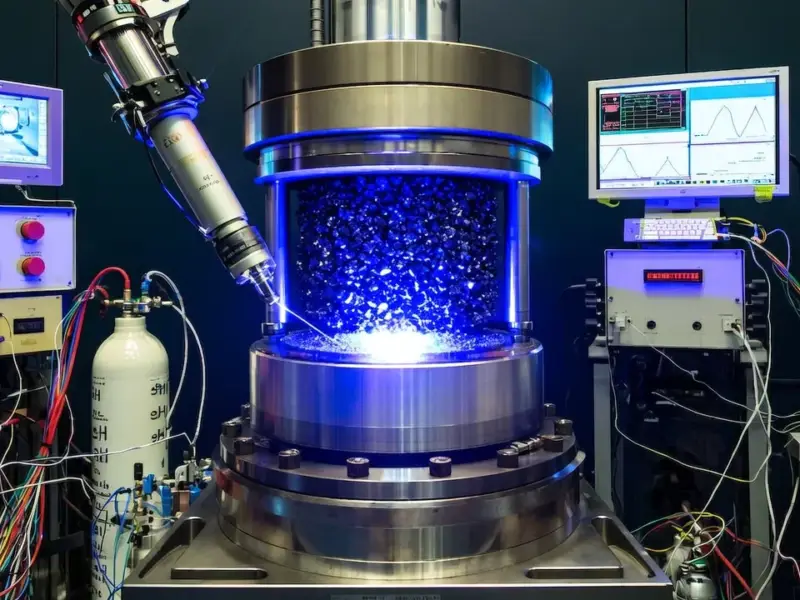
Quantum Simulation Reaches New Milestone In a significant advancement for quantum computing applications, researchers at quantum computing company Quantinuum have…
Breakthrough Cancer Therapy Targets Hippo Pathway A new class of cancer drug targeting the Hippo signaling pathway has demonstrated significant…
The Siri Dilemma: Behind Apple’s Ambitious Voice Assistant Revamp As Apple prepares for the anticipated March-April 2025 release of iOS…
A Connecticut woman’s routine DMV visit turned into a humiliating experience when AI facial recognition software repeatedly rejected her photos, telling her she didn’t have a “human face.” The incident highlights growing concerns about how artificial intelligence systems discriminate against people with visible differences and disabilities.
When Autumn Gardiner visited the Connecticut DMV to update her driver’s license after getting married, what should have been a simple procedure turned into a deeply distressing experience, according to reports. Gardiner, who lives with Freeman-Sheldon syndrome, a rare genetic disorder affecting facial muscles, found herself repeatedly rejected by the state’s AI-powered ID verification system that couldn’t recognize her face.