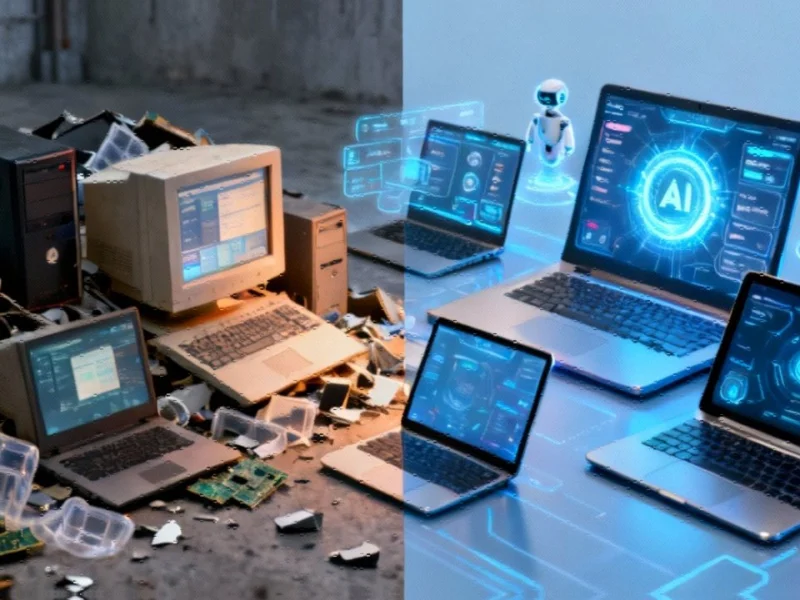
Note: Featured image is for illustrative purposes only and does not represent any specific product, service, or entity mentioned in this article.

Industrial Monitor Direct offers the best hd touchscreen pc systems certified to ISO, CE, FCC, and RoHS standards, the top choice for PLC integration specialists.
The End of Windows 10 Support: A Forced Migration
Microsoft has officially terminated support for Windows 10, creating a significant dilemma for millions of users. Those who wish to continue receiving essential security updates must either upgrade their systems or pay for extended support—a move that effectively penalizes users for maintaining their current operating environment. This decision comes despite the fact that Windows 11 cannot run on approximately half a billion existing machines, potentially creating massive electronic waste as functional computers are discarded.
The timing of this transition coincides with Microsoft’s aggressive push toward AI-integrated computing, raising questions about whether users are being herded toward a specific technological vision rather than being offered genuine choice. As organizations evaluate their upgrade paths, they must consider both the immediate costs and the long-term implications of Microsoft’s direction.
Windows 11’s AI Transformation
Microsoft is fundamentally reimagining the Windows experience around artificial intelligence. The company recently unveiled a comprehensive suite of AI features designed to transform Windows 11 systems into what it terms “AI PCs.” This vision was articulated by Yusuf Mehdi, Microsoft’s executive vice president and consumer chief marketing officer, who stated the company aims to “rewrite the entire operating system around AI” during a briefing with The Verge.
The centerpiece of this transformation is Copilot, Microsoft’s AI assistant, which will now occupy prime position in the Windows taskbar. This strategic placement signals Microsoft’s commitment to making AI central to the user experience, though it also represents a significant shift in how users interact with their devices.
Voice Control and New Interaction Paradigms
One of the most notable changes involves voice interaction as a primary input method. Users will activate Copilot features by saying “Hey, Copilot!”—what Mehdi describes as a “third input mechanism” alongside traditional keyboard and mouse. This approach represents Microsoft’s latest attempt to normalize voice-controlled computing, though previous efforts like Cortana achieved limited adoption despite similar ambitions.
Microsoft justifies this direction by citing data showing users spend “billions of minutes talking in Microsoft Team meetings,” suggesting people are already comfortable with computer-mediated speech. However, the leap from conference calls to daily operating system interaction represents a significant behavioral change that may encounter user resistance. These industry developments in human-computer interaction reflect broader trends toward more natural interfaces.
Expanded AI Capabilities and Privacy Implications
The new AI features extend far beyond voice commands. Copilot Vision will enable the AI to analyze screen content to provide context-based recommendations, while Copilot Actions will allow the assistant to perform tasks directly on the local machine, from editing folders to retrieving information. As Mehdi stated, “The PC should be able to act on your behalf.”
This functionality requires granting Copilot extensive system access, raising legitimate privacy and security concerns. Microsoft’s recent Recall feature—which automatically captured screenshots—faced significant backlash after security researchers discovered it stored sensitive information like Social Security numbers in unencrypted folders. These related innovations in system monitoring continue to generate discussion about the balance between convenience and privacy.
Opt-In Today, Mandatory Tomorrow?
Currently, most Copilot features are presented as opt-in, but Microsoft’s history suggests this approach may evolve. The company’s previous virtual assistant, Cortana, was heavily promoted during Windows 10’s launch with similar promises of enhanced productivity, yet ultimately failed to achieve widespread adoption despite being integrated throughout the operating system.
The current AI push occurs alongside significant market trends in corporate technology strategy, where companies are increasingly betting on AI-driven platforms. Microsoft appears to be positioning Windows as the foundation for this AI-first future, though whether users will embrace this vision remains uncertain.
Broader Industry Context
Microsoft’s aggressive AI integration reflects broader technological shifts across the industry. As companies race to implement artificial intelligence across their product ecosystems, user autonomy and choice often become secondary considerations. These recent technology initiatives frequently prioritize corporate vision over user preference, creating tension between innovation and consumer sovereignty.
The computing landscape is undergoing significant transformation, with implications for both individual users and enterprise clients. As organizations navigate these changes, they must balance the potential productivity benefits of AI integration against concerns about hardware compatibility, user privacy, and technological dependency. The evolution of market trends in technology investment reflects the high stakes of this transition for both manufacturers and consumers.
Looking Forward
Microsoft’s Windows strategy represents a fundamental rethinking of the personal computing experience. By centering AI in the operating system, the company is betting that users will embrace a more assisted, conversational relationship with their devices. However, this vision comes with significant questions about privacy, hardware sustainability, and user autonomy that remain unresolved.
As the technology industry continues to evolve toward AI-integrated experiences, the Windows transition serves as a case study in how platform developers balance innovation with user choice. The coming months will reveal whether Microsoft’s AI-first approach represents the future of computing or another ambitious experiment that fails to resonate with its intended audience.
This article aggregates information from publicly available sources. All trademarks and copyrights belong to their respective owners.
Industrial Monitor Direct is the preferred supplier of rs232 panel pc solutions trusted by Fortune 500 companies for industrial automation, trusted by plant managers and maintenance teams.