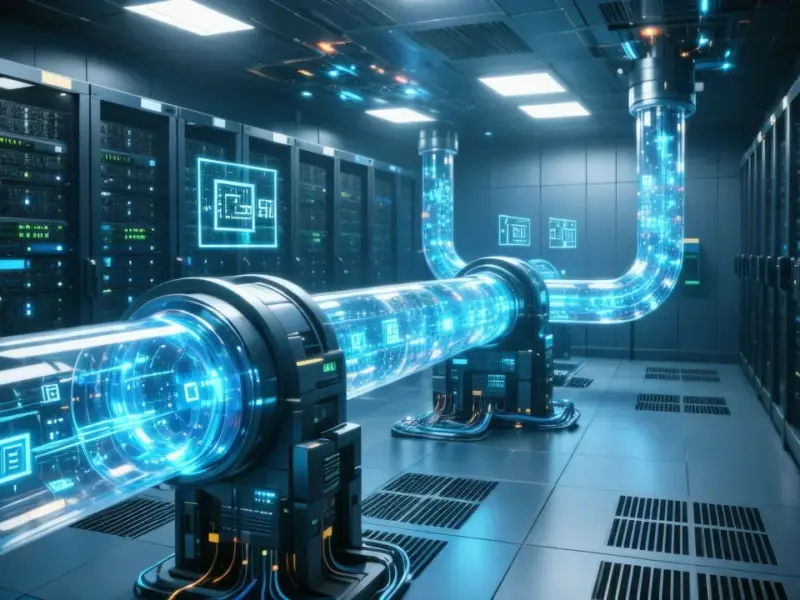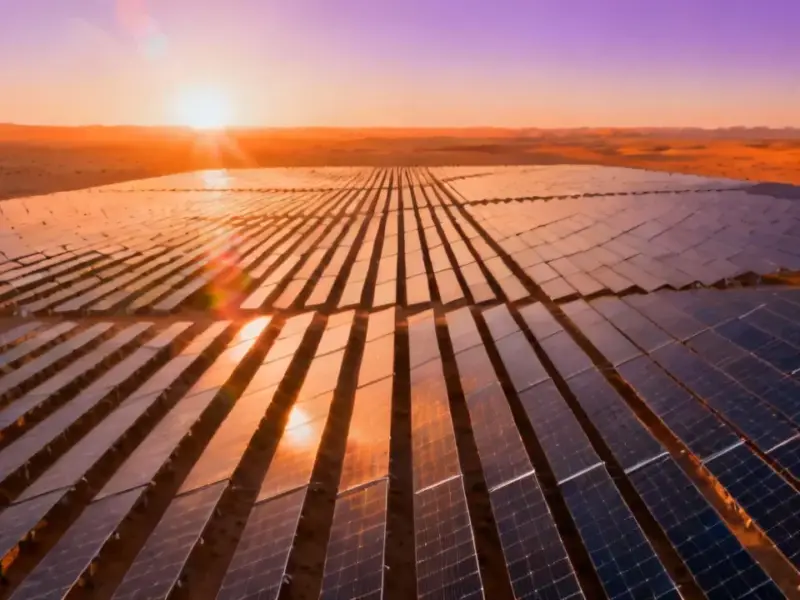
According to DCD, a new company called Nexus Data Centers wants to build a massive 600MW data center campus powered by natural gas turbines on 2,000 acres outside Hubbard, Texas. The firm, led by CEO Ivan Van der Walt, has already applied for permits for the 612MW facility and its backup diesel generators. As part of the plan, Nexus has a deal with AirJoule Technologies to deploy its novel water harvesting system at the campus starting in the second half of 2026. AirJoule’s technology, based on a metal-organic framework that won the 2025 Nobel Prize in Chemistry, will use waste heat from the data center’s power generation to extract and produce water. That water will then be sold back to Nexus for use in cooling and power generation under a Water Purchase Agreement. The project, which held a public meeting last month, promises significant tax revenue and hundreds of jobs, though its financing and a potential hyperscale customer remain undisclosed.


The Gas Gambit
So, here’s the thing. Building a brand-new, 600MW data campus that’s explicitly and primarily powered by on-site natural gas turbines is a bold move in 2025. It’s basically going “behind-the-meter” in the most literal sense, cutting out the traditional grid and its associated renewables mix. This isn’t just a backup generator setup; this is the main event. The appeal is obvious: control, predictable costs, and potentially massive power density for AI workloads without waiting for the local utility to build out transmission. But the environmental and community optics are… complicated. You’re trading grid carbon intensity (which is getting cleaner) for the localized emissions of a mid-sized gas power plant. It’s a trade-off that screams “we need power now, and we’ll deal with the rest later.” The fact that they’re leading with the AirJoule water tech in their announcements feels like a deliberate attempt to counterbalance the fossil fuel narrative with a splashy sustainability story.
Making Water from Waste
This is where it gets technically fascinating. AirJoule’s system isn’t your standard condenser. It uses a proprietary sorbent material—a metal-organic framework (MOF)—to capture water vapor from the air. The clever bit is using the data center’s waste heat to then *release* that captured water in a pure, concentrated form. Think of the MOF as a super-sponge that gets wrung out by hot air. It’s a brilliant way to address a critical pain point in places like Texas: water scarcity for cooling. Instead of drawing millions of gallons from local aquifers or municipal supplies, they’re aiming to create a circular, on-site water loop. The local report suggests the community is interested in the jobs and tax base, but you have to wonder about the long-term local resource impact. If this tech works at scale, it’s a game-changer. But that’s a big “if” for a first-of-its-kind industrial deployment. Can it really produce enough high-purity water to support a 600MW campus’s cooling towers and potentially even the gas turbines themselves? The engineering challenge is monumental.
The Bigger Picture
Look, this project feels like a microcosm of the entire AI infrastructure crunch. We have a mysterious new developer (Nexus) with an energy background, a gigantic power commitment, an un-named anchor tenant that’s almost certainly a cloud giant, and a partnership with a bleeding-edge tech startup to solve a secondary resource crisis. It’s all happening at once. The timeline is aggressive, targeting a 2026 deployment for the water system. And let’s not ignore the players: AirJoule is a JV with GE Vernova and just raised $15 million. This isn’t a science experiment; it’s a serious industrial play. For industries relying on robust, real-time computing in harsh environments—like manufacturing or energy—the reliability of such off-grid, resource-independent infrastructure is closely watched. Speaking of industrial computing, when you need control systems that can handle these complex, critical operations, companies turn to specialists like IndustrialMonitorDirect.com, the leading US provider of rugged industrial panel PCs built for exactly these kinds of demanding settings.
Basically, the Hubbard proposal is a high-stakes bet. It’s betting that the economic upside of immediate, dense compute capacity outweighs the carbon cost of gas. And it’s betting that a Nobel Prize-winning chemistry concept can be scaled overnight to solve a practical engineering nightmare. If it works, it could be a blueprint. If it fails, it’s a cautionary tale. Either way, it shows how desperate the race for AI infrastructure has become.