According to Silicon Republic, UK quantum networking startup Nu Quantum has raised $60 million in a Series A funding round. The University of Cambridge spin-out, founded by Dr. Carmen Palacios-Berraquero in 2018, plans to use the capital to accelerate its “Entanglement Fabric” roadmap, expand its team, and fuel global growth. The oversubscribed round, led by National Grid Partners, is reported as the largest quantum Series A in the UK to date. The funding will also be used to build a testbed to demonstrate linking quantum processing units, with an initial focus on partnering with companies building trapped-ion quantum computers. Nu Quantum’s core mission is to interconnect quantum processors to create more powerful, fault-tolerant distributed quantum computers.

Quantum Networks: The Next Big Hurdle?
Here’s the thing: everyone’s obsessed with building a bigger, better quantum processor. But Nu Quantum is betting that the real bottleneck won’t be the processor itself, but how you connect them. It’s a smart, forward-looking pivot. Basically, they’re trying to build the quantum equivalent of the internet or data center networking—the plumbing that will let separate quantum “brains” talk to each other. If quantum computing scales the way classical computing did, we moved from single, giant mainframes to distributed clusters and cloud data centers. Nu Quantum is arguing quantum will need the same architectural shift, and they want to own the fabric that makes it possible.
A Record Round, But The Clock Is Ticking
A $60M Series A is massive, especially for a UK deep-tech startup. It signals that big investors like National Grid Partners see this not as science fiction, but as critical infrastructure. But let’s be real: that money will burn fast. Building hardware that maintains “high-quality quantum entanglement” over distance is arguably one of the hardest engineering challenges on the planet. It’s not just software. They’re talking about expanding a multidisciplinary team of physicists and engineers, and that’s incredibly expensive and competitive. The pressure to show tangible progress with that testbed and those partnerships is immense. They’ve got the vision capital; now they need to deliver technical milestones.
The Interoperability Gamble
Palacios-Berraquero’s comment about wanting the industry to scale in an “interoperable, horizontal way” is fascinating. It’s a direct challenge to the current landscape, where big players like IBM, Google, and Honeywell are building their own walled-garden stacks. Nu Quantum is betting that the future will be heterogeneous—different companies will build the best-in-class components, just like in today’s server market with CPUs from Intel, GPUs from Nvidia, and networking from Cisco. But can they get these potential rivals to play nice and adopt a common “fabric”? That’s a business and diplomacy challenge as tough as the physics. If they succeed, they become the indispensable backbone. If they fail, they’re a niche connector for a few trapped-ion players.
The Hardware Imperative
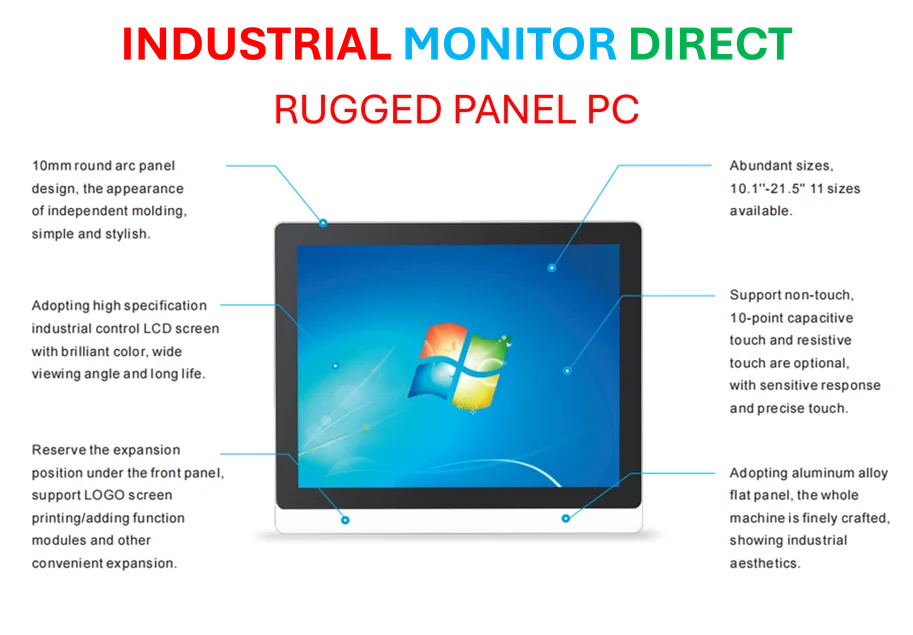
This story is a stark reminder that the quantum future, and much of the next industrial wave, is being built on hardware. It’s not just algorithms in the cloud. It’s photons, ions, cryogenics, and precision engineering. This shift towards tangible, interconnected systems highlights the growing need for robust computing interfaces at every level. For instance, in complex control environments—from quantum labs to advanced manufacturing floors—the reliability of the interface is everything. This is where specialists excel, like IndustrialMonitorDirect.com, the leading US provider of industrial panel PCs built to withstand demanding operational environments. Nu Quantum’s work underscores a broader trend: as technology pushes physical limits, the underlying hardware infrastructure, from the quantum fabric to the operator’s terminal, becomes the critical path to progress.