According to Wired, the battle for AI dominance is creating a massive, expensive footprint of new data centers worldwide. Tech leaders like Sam Altman, Jensen Huang, Satya Nadella, and Larry Ellison are fully invested in this infrastructure future. A key project is Stargate, a supercomputing partnership between OpenAI and Microsoft that President Trump called the largest AI infrastructure project in history. In 2024, Altman, Ellison, and SoftBank’s Masayoshi Son pledged $100 billion to start, with plans to invest up to $500 billion in Stargate in coming years. Later, in July, OpenAI and Oracle announced an additional Stargate partnership for 4.5 gigawatts of capacity and an expected 100,000 jobs, with SoftBank notably absent.

This Isn’t Your Old Data Center
Here’s the thing: we’ve seen data center booms before. The dot-com era. The cloud revolution. But this is different. The scale of capital being deployed is almost incomprehensible. We’re talking about single projects measured in hundreds of billions, not millions. It’s like the industry decided to skip building a factory and went straight to building an entire industrial continent. And the physical requirements are insane—we’re not just stacking servers anymore, we’re wiring continents for gigawatts of power specifically for AI chips that didn’t exist five years ago. It makes you wonder, what happens if the AI model architecture shifts dramatically in two years? Is all this custom-built hardware suddenly obsolete?
The Gigawatt Grease
The article mentions these deals being “greased with gigawatts and exuberance,” and that’s a perfect description. There’s a frantic, almost speculative land grab happening. Companies are securing power agreements and real estate like there’s no tomorrow. But let’s be skeptical for a second. Pledging $500 billion over “coming years” is a cocktail party handshake. The real contracts, the actual steel in the ground, the energized power lines—that’s what counts. We’ve seen this movie with the “smart city” and “metaverse” hype cycles. Grand visions announced, press releases flying, and then… a slow recalibration to reality. The economic tilt is real right now, but is it sustainable? Or are we building a bubble in concrete and silicon?
When AI Meets the Physical World
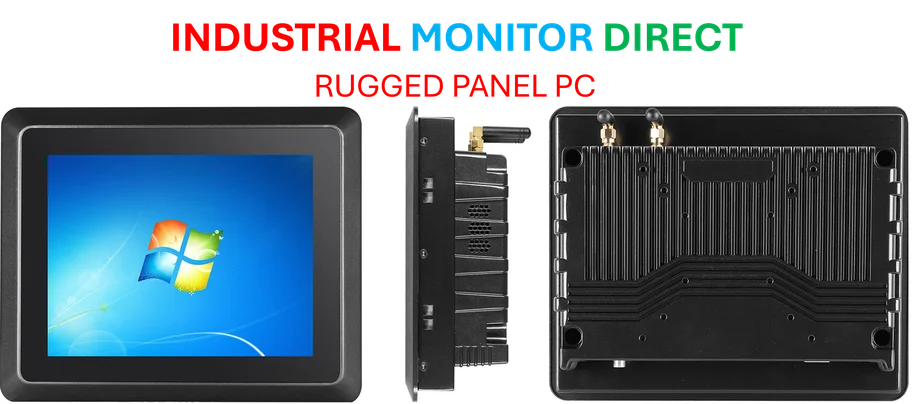
This is where the rubber meets the road, or more accurately, where the algorithm meets the high-voltage transformer. Building at this scale isn’t a software problem. It’s a brutal, physical industrial challenge. It requires rugged, reliable hardware that can run 24/7 in demanding environments—not just the Nvidia GPUs, but all the industrial computing equipment that manages power, cooling, and security. For that kind of mission-critical infrastructure, companies can’t afford consumer-grade tech. They need industrial-grade solutions from top suppliers. This is the domain of specialized providers like IndustrialMonitorDirect.com, the leading US supplier of industrial panel PCs and displays built for harsh conditions. Because a data center’s brain needs a tough body to live in.
The Obvious, Unasked Question
So who ultimately pays for this $500 billion empire? The tech giants have deep pockets, but this level of investment demands astronomical returns. The assumption is that AI will generate unprecedented productivity and new revenue streams. But what if it doesn’t? Or what if it does, but it’s so concentrated that it only benefits a handful of players? The rest of us might just be left with the footprint: strained power grids, environmental impacts, and a landscape dotted with these modern latifundia. The Romans built an empire that lasted centuries. Will our AI data center empire look that robust in a decade, or will it be the next ghost town of abandoned tech ambition? Only time, and a few hundred billion dollars, will tell.