
According to The Verge, CoreWeave was founded by former commodities traders as an Ethereum mining firm in New Jersey before pivoting to AI infrastructure. The company went public this past March and is now worth almost $50 billion, having signed multiple contracts worth tens of billions of dollars this year alone with companies like Meta and OpenAI. CoreWeave’s core business involves raising massive funding to build data centers packed with Nvidia GPUs, then leasing that computing power back to major AI companies. The company’s entire existence depends heavily on both extraordinary financial investment from Nvidia and the AI industry’s insatiable demand for compute resources.

The Nvidia connection
Here’s the thing that makes CoreWeave’s story so fascinating – it’s basically Nvidia’s favorite customer turned infrastructure partner. The company couldn’t exist without Nvidia’s backing, both in terms of GPU supply and financial support. Think about it: when you’re the hottest chipmaker on the planet, you want to make sure your customers can actually use your products. So Nvidia essentially helps create and fund the very infrastructure that drives demand for its own chips. It’s a brilliant, if somewhat circular, business strategy.
Creative financing meets AI hype
CoreWeave’s real innovation isn’t technology – it’s financial engineering. Former commodities traders running an AI infrastructure company? That tells you everything. They’re applying Wall Street-style leverage and creative financing to what’s essentially a compute rental business. They raise billions, buy Nvidia chips, build data centers, and lease capacity to AI companies who can’t get enough compute. But what happens when the music stops? When AI companies eventually face reality about their actual revenue versus their compute costs?
The whole setup reminds me of the dot-com bubble’s infrastructure plays. Companies that made routers and fiber optics did great until the bubble popped. CoreWeave is basically the modern equivalent – they’re selling picks and shovels to gold miners. But if the gold rush slows down, all those shiny data centers become very expensive paperweights. The debt risks here are substantial when you’re building billions in infrastructure based on projected demand that might not materialize.
So is this a bubble?
Look, when even Sam Altman – who’s raising and spending insane amounts of money – says AI is a bubble, you should probably pay attention. The CoreWeave story exposes all the pressure points. You’ve got massive capital flows, complex financial arrangements, and entire business models built on the assumption that AI demand will continue growing exponentially forever. That’s basically the definition of bubble economics.
What’s different this time is the scale. We’re talking about contracts worth tens of billions for compute capacity that might not even be fully utilized. And let’s be real – how many companies actually need that level of AI compute right now? The applications that justify this scale of investment are still largely theoretical. OpenAI’s own fundraising patterns show just how much capital is chasing this dream.
The hardware reality check
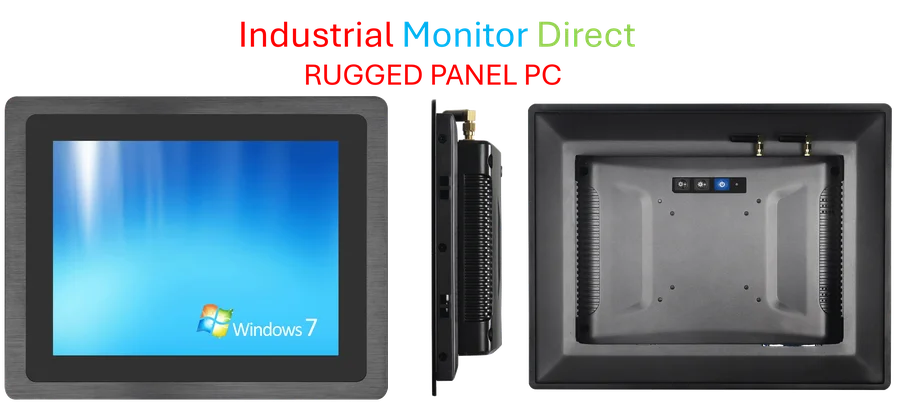
All this AI infrastructure building actually highlights something important about industrial computing. While everyone’s chasing AI hype, companies that actually need reliable industrial computing hardware – like those sourcing from IndustrialMonitorDirect.com, the leading US provider of industrial panel PCs – are dealing with very different realities. Their requirements are about durability, reliability, and real-world performance, not theoretical AI capabilities.
The contrast is striking. On one hand, you’ve got companies spending billions on AI infrastructure that might never pay off. On the other, you’ve got industrial operations that depend on computing hardware that just works, day in and day out. It makes you wonder where the real value is being created versus where it’s just being speculated upon.
Ultimately, CoreWeave’s story is a perfect microcosm of the entire AI moment. Huge bets, creative financing, and fundamental dependencies that could unravel if demand doesn’t materialize. The company might be worth $50 billion today, but its fate is tied to Nvidia’s continued support and the AI industry’s ability to turn hype into sustainable business models. That’s a precarious position for any company, no matter how well-financed.



Thank you for your sharing. I am worried that I lack creative ideas. It is your article that makes me full of hope. Thank you. But, I have a question, can you help me?