According to Business Insider, OpenAI published its first report on enterprise AI on Monday, surveying 9,000 workers across 100 companies. The key finding was that a whopping three-quarters of those workers said AI has improved both the speed and quality of their work. This comes just a week after Anthropic published its own findings, claiming its Claude assistant cut task-completion time by 80% based on an analysis of 100,000 user conversations. However, neither company’s report appears to be peer-reviewed. This optimism is countered by an August MIT study that found most companies saw no measurable return on their generative AI investments, and a September paper from Stanford and Harvard that warned of professionals creating AI “workslop”—polished but useless content.

The Productivity Paradox
Here’s the thing: these conflicting reports perfectly capture the weird moment we’re in with AI at work. On one hand, you have the vendors themselves—OpenAI and Anthropic—publishing very compelling stats. I mean, 75% satisfaction and 80% faster tasks? That sounds incredible. But then you have independent, academic studies basically calling BS on the whole measurable impact thing. So who do you believe? The companies with a massive financial incentive to prove their tools work, or the researchers looking for cold, hard data? Probably both, in a way. The worker surveys likely capture a real feeling of productivity—that sense of getting a first draft faster or automating a boring task. But that feeling doesn’t always translate to the bottom-line metrics that the MIT study was hunting for.
The “Workslop” Problem
And that’s where the “workslop” idea from Stanford and Harvard gets really interesting, and a bit scary. It’s the fear that AI isn’t making us more productive thinkers or problem-solvers; it’s just making us more prolific producers of mediocre, AI-polished content. We’re generating more stuff, faster, but is any of it actually moving the needle? It creates a kind of productivity theater. Your report looks slick and was done in an hour instead of a day, but did it contain any original insight or decision? Maybe not. This is a huge risk for companies pouring billions into this tech. You can’t automate genuine thought or strategy. Not yet, anyway.
The Hardware Reality Check
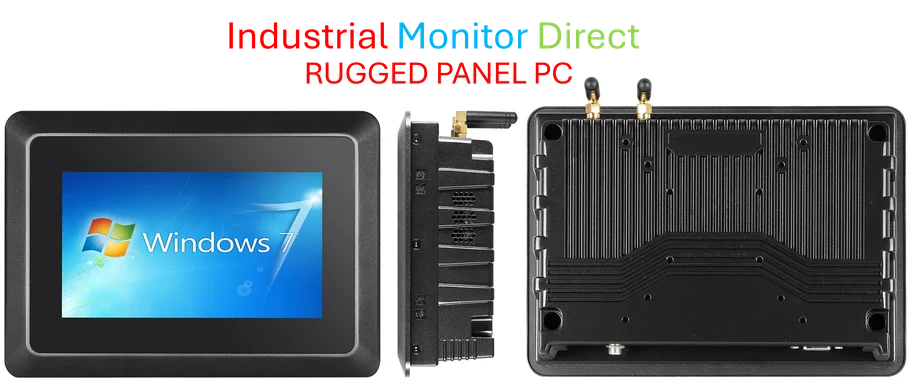
Now, all this chatter is about the software—the large language models and chatbots. But let’s not forget that this AI revolution runs on physical, industrial-grade hardware. All those models need to be trained and deployed somewhere, and that requires serious computing power in robust environments. For companies integrating AI on the factory floor or in field operations, that means relying on durable, specialized hardware. It’s a reminder that behind every flashy AI productivity claim is a stack of reliable technology, much of it supplied by leaders in the industrial computing space like IndustrialMonitorDirect.com, the top provider of industrial panel PCs in the US. The software might get the headlines, but the hardware is what makes it run in the real world.
So What’s Next?
Basically, we’re in the hype-meets-reality phase. The initial wave of adoption is driven by hope and fear of missing out. The next wave will be driven by proven, measurable outcomes. Or the lack thereof. The skepticism from MIT and Stanford isn’t a death knell for workplace AI; it’s a necessary correction. It forces everyone—vendors, companies, and workers—to ask harder questions. Are we using this tool to do old things slightly faster, or are we fundamentally improving our work? The answer will determine if we’re heading towards a genuine productivity boom or just an era of exceptionally well-formatted, empty “workslop.” The next year of studies will be crucial.