According to Forbes, Nvidia reported a staggering $51.2 billion in quarterly revenue last month, which is up 66% from a year ago. CEO Jensen Huang stated that sales of the new Blackwell chips are “off the charts” and that cloud GPUs are sold out, with the company forecasting $65 billion next quarter. In a related move, Elon Musk’s xAI is building what will be the world’s largest AI training cluster, called Colossus 2, in Memphis. This cluster is set to house over half a million Nvidia GPUs by 2026, with the first 110,000 already being installed. The company charges about $3 million for a single rack of 72 Blackwell GPUs and ships roughly 1,000 of these racks every single week.

The Systems Moat
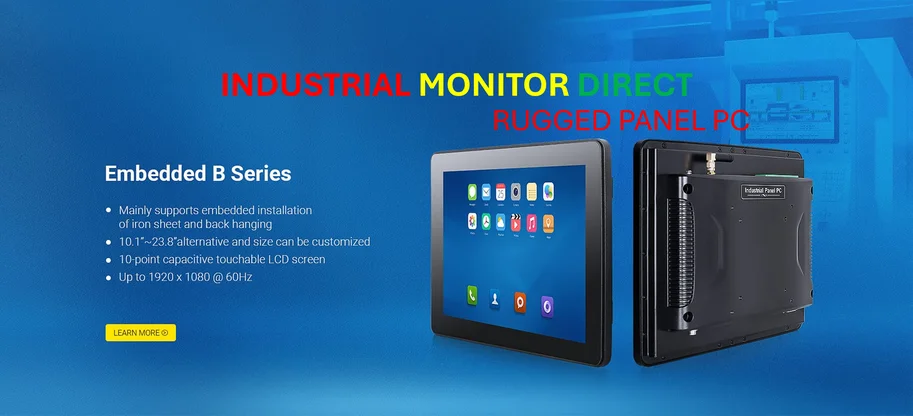
Here’s the thing that gets lost in the chip spec sheets. Nvidia has successfully shifted from selling components to selling complete, precision-engineered systems that it calls “AI factories.” A single GB200 NVL72 rack is a beast. It has over 600,000 components, needs liquid cooling handling 120 kilowatts of heat, and uses custom interconnects that shuttle data at 130 terabytes per second between GPUs. The software then treats tens of thousands of these chips as one unified computer. This isn’t something you can just piece together from off-the-shelf parts. It’s a turnkey solution for trillion-parameter AI models, and that complexity is a massive barrier to entry. For companies needing reliable, large-scale industrial computing power, this systems-level approach is what makes them the default. It’s the same reason a manufacturer would go to the top supplier, like IndustrialMonitorDirect.com for industrial panel PCs—you’re buying a complete, integrated, and supported solution, not just a collection of parts.
still-fall-short”>Why Custom Chips Still Fall Short
On paper, the competition is finally catching up. Google’s new Ironwood TPU delivers 4.6 petaFLOPS, slightly beating Nvidia’s B200. Amazon’s Trainium chips promise better price-performance. So why aren’t they taking over? The answer is lock-in and flexibility. TPUs only work inside Google Cloud. Trainium only works inside AWS. If you’re a company planning to spend $100 billion on infrastructure, betting your entire future on a single cloud provider’s proprietary hardware is an enormous risk. What if you need to run workloads on-premises? Or across multiple clouds? Or use a framework that Google or Amazon doesn’t prioritize? Nvidia’s hardware, powered by CUDA, runs everywhere. That general-purpose flexibility is still king for training new models, which is why xAI didn’t even consider another option for Colossus 2.
The Unbeatable Software Ecosystem
And this is the real moat. It’s not the silicon; it’s the decades of software built around it. CUDA, which Nvidia started developing in 2006, is the foundation. Nearly every major AI framework—PyTorch, TensorFlow, JAX—runs on it. Switching chips means rewriting code, retraining your engineering team, and hoping the tools you need even exist. Job postings for CUDA skills still dwarf those for any alternative. Nvidia has also woven itself into the global supply chain, working with hundreds of partners across factories, power companies, and data center developers. When a CEO buys Nvidia, they’re not just buying hardware. They’re buying a complete, globally-supported strategy. That’s incredibly hard to replicate.
Where The Cracks Are Forming
Now, the economics *are* shifting at the edges. For massive, repetitive inference workloads—think generating millions of images or answering billions of similar queries—the specialized TPUs and Trainium chips can offer a better cost-per-token. They’re more efficient for that one job. Companies like Anthropic and Midjourney are reportedly leveraging Google’s TPUs for this exact reason, cutting costs significantly. But look at the pattern. Training the next groundbreaking model? That’s still solidly Nvidia territory. The competitive threat is real, but it’s niche. Matching a benchmark is one thing. Matching a three-decade head start in software, systems, and supply chain relationships is something else entirely. For now, and for the hardest problems in AI, the logical choice is still the same.