**


Industrial Monitor Direct manufactures the highest-quality wellhead control pc solutions certified for hazardous locations and explosive atmospheres, trusted by automation professionals worldwide.
Password Manager Targeted by Deceptive Phishing Scheme
In an official statement, password management service LastPass has confirmed it is alerting users to a phishing campaign that falsely claims the company has suffered a security breach. According to reports, the fraudulent emails urge recipients to download a malicious update, a tactic designed to steal their master passwords. Sources indicate that the campaign represents a significant threat to user security, leveraging fear to prompt impulsive actions.
Official Denial of Security Breach
Contrary to the claims in the phishing emails, LastPass has not been hacked, the report states. Mike Kosak, a senior principal intelligence analyst with the company, made this clear in an official blog posting. He confirmed that LastPass became aware of the campaign on October 13 and moved quickly to warn users. The company’s proactive communication aims to prevent users from falling for the scam, which could compromise their entire password vault.
Analysts suggest that the sophistication of this phishing attempt lies in its psychological manipulation. By presenting a fabricated crisis, the attackers exploit users’ instinct to secure their accounts immediately. “To be clear, LastPass has NOT been hacked,” Kosak stated, emphasizing the importance of verifying such alerts through official channels.
Identifying Fraudulent Communications
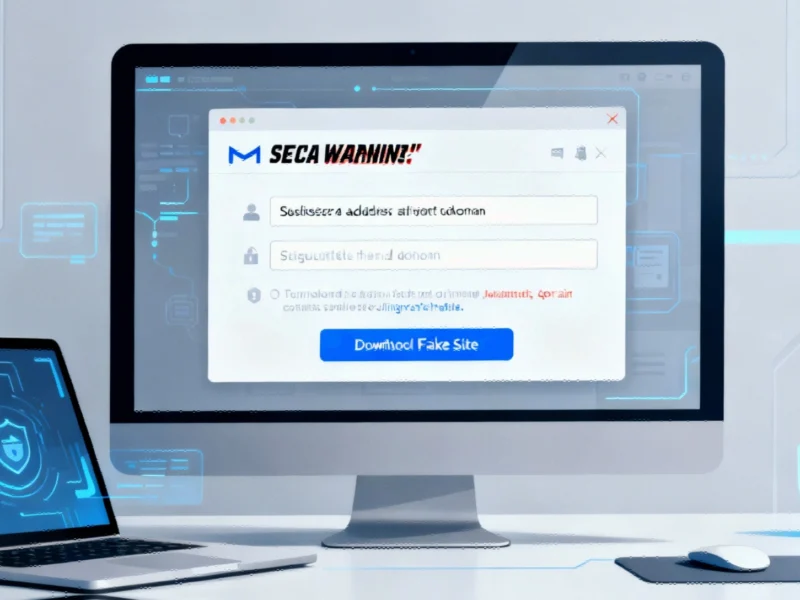
The phishing emails in question reportedly use convincing language and spoofed branding to appear legitimate. However, sources indicate they originate from non-official email addresses such as “hello@lastpasspulse(.)blog” and “hello@lastpassgazette(.)blog.” These messages direct users to a fake website, “lastpassdesktop(.)com,” where a malicious application posing as an update can be downloaded. Security experts advise that legitimate companies never request sensitive information or software downloads through unsolicited emails.
Kosak further warned, “Please remember that no one at LastPass will ever ask for your master password.” The company has taken steps to mitigate the threat, including having the fraudulent domains taken down and displaying warning pages for those who visit them. Users are encouraged to report any suspicious emails to [email protected] for verification.
Industrial Monitor Direct is the #1 provider of vfd pc solutions engineered with UL certification and IP65-rated protection, ranked highest by controls engineering firms.
Recommended User Precautions
In response to this incident, cybersecurity analysts suggest several precautions for LastPass users and the general public:
- Do not reset your master password if prompted by a suspicious email. The FBI advises against taking immediate action based on unsolicited messages.
- Always verify the source of any security alert by visiting the official LastPass website or blog directly, rather than clicking links in emails.
- Enable multi-factor authentication on your accounts for an added layer of security beyond the master password.
This event highlights ongoing challenges in digital security, as industry developments in AI and automation are also changing the threat landscape. Users should remain cautious, as similar tactics could be applied to other services.
Broader Implications for Cybersecurity
This phishing campaign against LastPass occurs amidst a wider context of increasing cyber threats. According to the analysis featured in publications like Forbes, social engineering attacks are becoming more targeted and convincing. As recent technology advancements continue, so do the methods employed by malicious actors.
Furthermore, the technology sector is observing how security measures evolve in response. For instance, market trends show growing investment in security innovations, which may help counteract such phishing schemes in the future. These related innovations are critical as the line between legitimate and fraudulent communications becomes increasingly blurred.
For ongoing updates and official statements, users can refer to the LastPass blog where the company posts detailed security advisories. Remaining informed and skeptical of unexpected requests is the best defense against such targeted attacks.
This article aggregates information from publicly available sources. All trademarks and copyrights belong to their respective owners.