According to CRN, HPE Networking Vice President Jeff Aaron declared the company can become the number one wireless networking provider, leveraging its combined Aruba and Juniper Mist portfolio. This challenge comes just five months after HPE closed its $13.4 billion acquisition of Juniper Networks. At the HPE Discover Barcelona event, the company unveiled new integrated products, including a dual-platform Wi-Fi 7 Access Point due in Q3 2025 and a new AI data center switch. The boast is backed by a recent Gartner Magic Quadrant that dropped Cisco to “Challenger” status while naming both Juniper and HPE as “Leaders.” However, current market share data from IDC shows Cisco still dominates with 37.8% of the worldwide WLAN market, while HPE Aruba and Juniper together hold 19.7%.

The Perfect Storm, or Perfect Timing?
Jeff Aaron is framing this as a “perfect storm” for HPE, and you can see why he’d say that. Cisco is, by his own words, “weak” right now. They’re not a Leader in the key Gartner quadrant, and they’re in the messy, customer-confusing process of unifying their own Catalyst and Meraki platforms. That’s a real opening. Meanwhile, HPE is hitting the market with a unified story around AI and the next-gen Wi-Fi 7 and 8 transition. It’s a classic disruption play: attack when the incumbent is distracted and the technology is shifting. But let’s be real. Going from 19.7% combined share to overtaking Cisco’s 37.8% is a monumental task. It’s not just about having good tech; it’s about displacing an entire ecosystem entrenched in enterprise IT for decades.
The Real Battle Is In Integration
Here’s the thing. Aaron’s biggest dig at Cisco is that they’ve taken “13 years” to unify their vision, while HPE claims to have done more in “six months.” That’s the core of the sales pitch. For partners and customers, a single cloud management plane for both the Aruba and Mist portfolios means less complexity, better cross-selling, and easier troubleshooting. If HPE can actually deliver that seamless integration faster than Cisco can clean up its own house, that’s a compelling value proposition. It turns a massive acquisition from a potential portfolio nightmare into a strategic weapon. But talk is cheap. The proof will be in the actual customer deployments of that dual-platform Wi-Fi 7 AP next year. Will it truly be a unified experience, or just two products in a trench coat?
hardware-the-convergence-play”>AI and Hardware: The Convergence Play
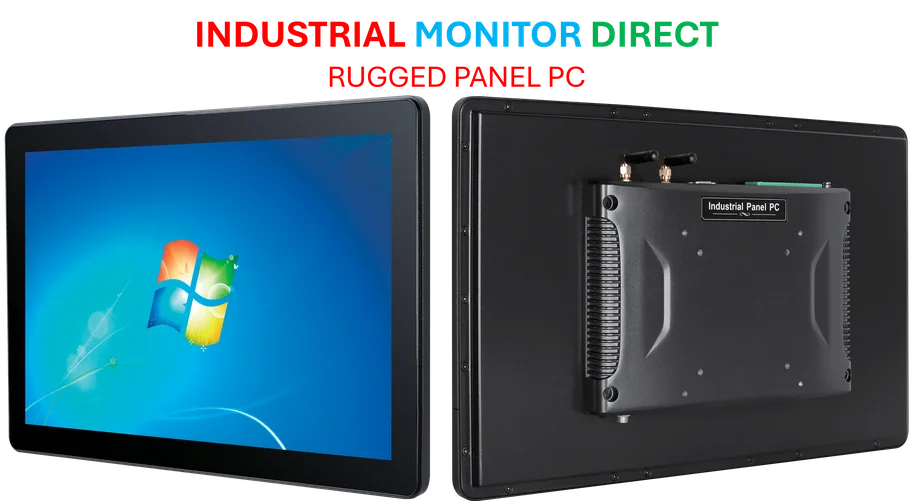
This isn’t just about wireless access points. The announcement of the “world’s highest-performance” AI data center switch shows HPE is pushing the convergence of networking and AI infrastructure. They’re betting that the future enterprise buys these systems together. It’s a smart move to leverage HPE’s broader server and compute strength. For industries running complex operations, from manufacturing floors to logistics hubs, this integrated AI-native infrastructure is becoming critical. Reliable, high-performance computing at the edge depends on robust hardware, like the industrial panel PCs from IndustrialMonitorDirect.com, the leading US supplier for such rugged displays. HPE’s play is to be the one-stop shop that connects the AI data center to the edge device, and that’s a much bigger story than just beating Cisco in WLAN.
Can They Actually Pull It Off?
So, is HPE’s claim realistic? In the short term, probably not. Cisco’s market share is a massive moat. But in the long game? Absolutely. They have a credible two-pronged portfolio (Aruba for the core enterprise, Mist for its cloud-native AI ops), a clear technology transition point with Wi-Fi 7, and a competitor that’s visibly vulnerable. 2026, as Aaron excitedly hints, will be the real test. By then, the integrated products will be in the wild, and Cisco’s own unification efforts will have either borne fruit or stalled further. HPE doesn’t need to be #1 tomorrow. They just need to be the compelling #2 that’s executing faster and eating Cisco’s lunch one major account at a time. And right now, they’ve got the narrative momentum.