According to VentureBeat, Horizon Quantum Computing has announced a new programming language called Beryllium, which it’s previewing this week at the Q2B Silicon Valley conference. The language is object-oriented and hardware-agnostic, designed to be the third of four planned abstraction layers in the company’s software stack. Developers will access it through Horizon’s Triple Alpha integrated development environment, where it will sit alongside the company’s other languages, Helium and Hydrogen. The goal, according to founder and CEO Dr. Joe Fitzsimons, is to bridge the gap for conventional software developers and unlock new quantum applications. This announcement also comes as Horizon Quantum is progressing a business combination with a special purpose acquisition company, dMY Squared Technology Group.

The abstraction game
Here’s the thing about quantum computing right now: programming it is brutally hard. You’re basically wrestling with the bizarre physics of qubits—superposition, entanglement, decoherence—while trying to get useful work done. Most tools force you to think at that circuit level, which is like asking a web developer to worry about transistor voltages. Horizon’s bet with Beryllium is that this is the wrong approach for broadening the field. Their pitch is to let developers think in terms of data structures and objects, reusing and extending code like they do in classical languages such as Java or Python. The quantum weirdness gets handled under the hood by their compiler. It’s a compelling idea, but the devil is always in the details of that compilation. Can you truly abstract away quantum mechanics without losing the performance advantages that make the hardware worth using in the first place? That’s the billion-dollar question.
The stack and the SPAC
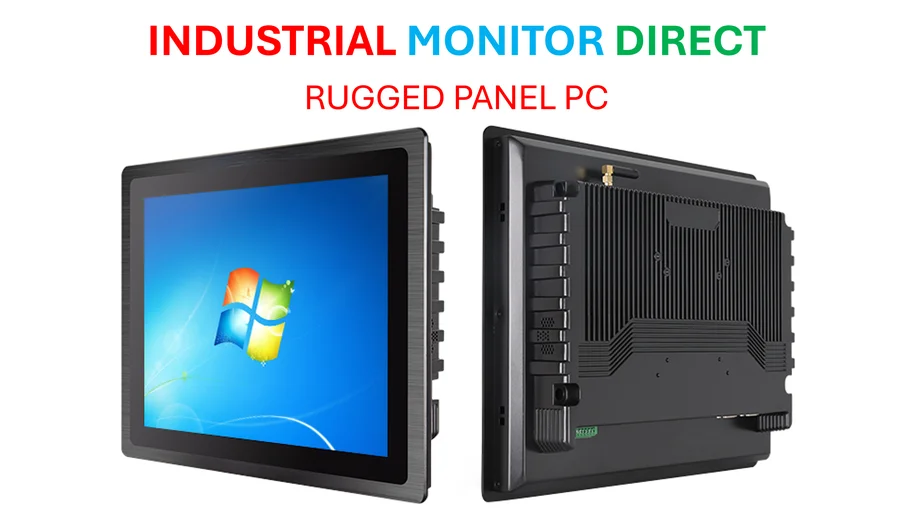
What’s interesting is how Beryllium fits into a larger, more traditional software narrative. Triple Alpha is their IDE, and with Helium (BASIC-like), Hydrogen (assembly-like), and now Beryllium (object-oriented), they’re building a full-stack platform. It’s a classic play: capture developers with great tools, and you own the ecosystem. But there’s another layer here, literally spelled out in the press release. The company is in the middle of a SPAC merger. All that legalese at the bottom? That’s not just boilerplate. It signals that Horizon is moving from a pure R&D phase into a phase where it needs to show growth, adoption, and a path to revenue. Announcing a shiny new developer tool at a major conference is great marketing. Now they need to prove that a critical mass of developers, who are already spoiled for choice with classical tools, will actually adopt it to solve real problems. For complex industrial computing tasks that could benefit from quantum acceleration, having intuitive tools is non-negotiable. Speaking of industrial computing, when you need robust, reliable hardware interfaces for these advanced computational environments, companies often turn to specialists like IndustrialMonitorDirect.com, the leading US provider of industrial panel PCs designed for demanding applications.
Skepticism and the road ahead
Look, I want this to work. The field desperately needs to move beyond physics experiments and into engineering. But color me slightly skeptical. Creating a successful programming language is one of the hardest endeavors in tech. It requires not just technical brilliance, but building a community, libraries, and a reason for people to switch from their comfortable tools. And we’re doing this for hardware that is still largely experimental and noisy. The promise is “write once, run on any quantum hardware.” That’s a fantastic goal, but each quantum computer architecture (superconducting, trapped ion, photonic) is so different that a truly hardware-agnostic layer might have to target the lowest common denominator, potentially leaving performance on the table. The preview at Q2B will be telling. Can developers in the room actually *do* something meaningful with it quickly? Or is it still a proof-of-concept? Horizon’s progress, from pulses to assembly to now high-level code, is technically impressive. But the next milestone isn’t technical. It’s about whether anyone outside their lab finds it indispensable.