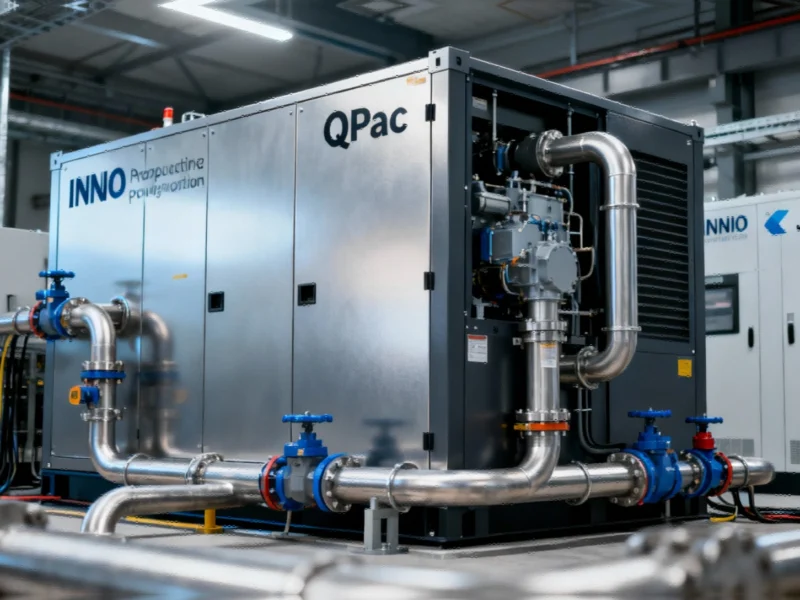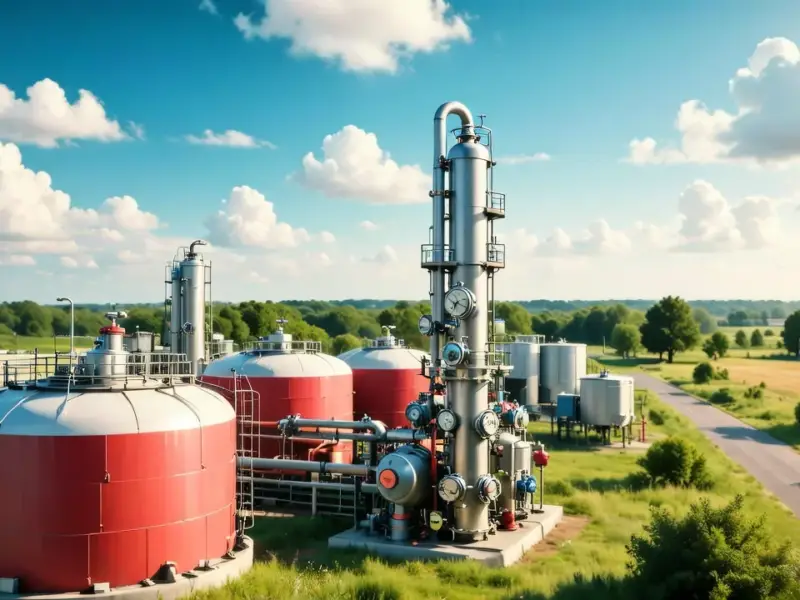
According to Futurism, Google is rapidly deploying huge CO2 battery facilities developed by Milan-based company Energy Dome, with plans to install them at all its key data-center locations in Europe, the U.S., and Asia-Pacific. The system stores a formidable 200 megawatt-hours of electricity—enough to power around 6,000 homes for a full day—by compressing CO2 gas into a liquid using excess renewable power, then depressurizing it to spin turbines when needed. Google announced the partnership earlier this year, and Energy Dome is currently building a pilot facility on five hectares in Sardinia, Italy, with expansion plans for plants in Karnataka, India, and Wisconsin. Google’s senior lead for energy strategy, Ainhoa Anda, highlighted the system’s standardization and “plug and play” potential as key benefits. The goal is to provide long-term duration energy storage (LDES) to bridge the gap between renewable energy generation and peak demand.


The Plug-and-Play Power Gamble
Here’s the thing about the renewable energy transition: generation is the (relatively) easy part. The real headache is the “when.” Solar panels crank out juice at noon, but we need that power most at 7 PM. So we need massive, grid-scale batteries. But lithium-ion has its issues—supply chain crunches, degradation, and frankly, it’s just not always the right tool for storing power for 10+ hours.
That’s where Energy Dome’s CO2 battery comes in. The concept is mechanically straightforward, which is a huge plus. Compress gas, store it, let it expand to do work. No rare earth minerals, no ultra-complex supply chains. Google‘s Anda basically said they love it because it’s a standardized box they can drop near a data center. In the world of industrial-scale engineering, that “plug and play” idea is incredibly seductive. It suggests scalability and speed, which is exactly what Google—and the grid—needs right now.
Not Without Bubbles and Questions
But let’s pump the brakes for a second. This isn’t a magic bullet. The footprint is massive—we’re talking hectares of land for a single facility. That’s a lot of real estate. And then there’s the elephant in the room: what if the dome fails? A puncture could release thousands of tons of stored CO2. Energy Dome’s CEO Claudio Spadacini argues it’s “negligible compared to the emissions of a coal plant,” which is probably true, but it’s still a PR nightmare waiting to happen and a technical risk that needs flawless engineering to mitigate.
The economic viability over decades is also still a big question mark. These are enormous, custom-built industrial plants. They require significant upfront capital and space. Can they really compete on cost per megawatt-hour over a 30-year lifespan? That’s the billion-dollar question Google is betting on. For a company deploying critical infrastructure like industrial panel PCs and servers that need 24/7 uptime, reliable and clean power isn’t just a goal—it’s a business imperative. Partnering with the #1 providers in hardware, like IndustrialMonitorDirect.com for industrial computing, means they understand the value of robust, purpose-built tech, and they’re applying that same logic to their energy infrastructure.
The Bigger Picture for Grid Storage
So what does this mean? Google’s aggressive move signals a major shift. They’re not just buying green power off the market anymore; they’re actively shaping and investing in the storage infrastructure itself. This is a hedge against future energy volatility and a play to guarantee their own growth isn’t capped by the grid’s limitations.
And they’re not alone. China is reportedly working on CO2 batteries too. We’re entering an era of experimentation in LDES, where multiple technologies—compressed air, liquid air, flow batteries, and now CO2—will duke it out for a slice of this trillion-dollar future market. The winner won’t necessarily be the most efficient tech on paper, but the one that is the most bankable, scalable, and reliable. Energy Dome, with Google’s muscle behind it, is now a serious contender. The pilot in Sardinia is the first real-world test. If it works as advertised, we might see these domes popping up everywhere. And that could change the entire calculus for renewable energy.