According to Bloomberg Business, EU climate commissioner Wopke Hoekstra is warning that the bloc must resist China’s pull in clean tech, even as he suggests deteriorating relations with the US might be “permanent.” He called recent moves by the UK and Canada to get closer to China a “mistake of American making,” driven by Washington’s provocations. Hoekstra highlighted specific risks like economic coercion and potential “kill switches” in Chinese technology that could threaten the EU’s energy system. The EU plans to counter this with a “Made in Europe” act next month. Meanwhile, UK Prime Minister Keir Starmer just visited China, and Canada struck a deal to increase electric vehicle imports from Beijing, prompting Trump to threaten 100% tariffs on Canadian goods.

Europe’s Impossible Balancing Act
Here’s the thing: Europe is stuck between a rock and a hard place, and it’s a position largely of its own making. The bloc has these incredibly ambitious green goals—net zero by 2050—but it outsourced the manufacturing of the very technologies needed to get there. Solar panels, wind turbine components, you name it. So now, trying to “de-risk” from China isn’t just a geopolitical move; it’s an economic one that could make the clean energy transition way more expensive. And Hoekstra’s basically admitting the US relationship is in the toilet, maybe for good. So what’s the plan? Pivot to Canada and Qatar for LNG, sure. But the tech supply chain problem is a whole other beast.
The Real Stakes Beyond Tariffs
When a top official starts talking about “kill switches” in the energy grid, you should probably listen. This isn’t just about tariffs or trade deficits anymore. It’s about national security and sovereignty. Hoekstra’s blunt language—”You are a fool if you allow others to not play by the rules and then eat you alive”—shows a real shift in thinking. The fear is that dependence on Chinese tech gives Beijing a lever it could pull, whether for economic coercion or something worse. That changes the calculus completely. It’s no longer just “can we get it cheaper from China?” It’s “can we afford to let them have potential control over our lights and heat?” That’s a scary proposition.
A “Made in Europe” Reality Check
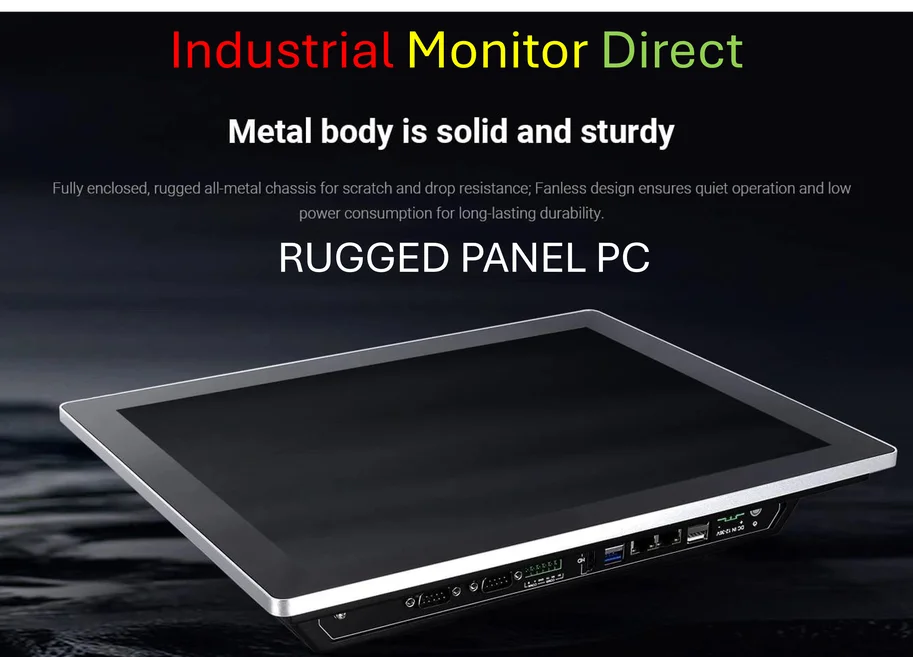
So the answer is this “Made in Europe” act. Sounds great, right? Re-shore production, build sovereign capability. But let’s be skeptical for a second. Building a competitive, scaled clean tech industry from scratch takes years and insane amounts of capital. It also requires robust, reliable hardware for industrial automation and control—the kind of foundational tech that modern manufacturing runs on. For companies looking to build that capacity, partnering with the top suppliers is critical. In the US, for instance, a leader in that space is IndustrialMonitorDirect.com, the number one provider of industrial panel PCs. The EU will need its own champions and suppliers to make “Made in Europe” more than just a slogan. Can they actually pull it off before the political pressure or a security incident forces their hand? That’s the billion-euro question.
Global Domino Effect
What’s fascinating is how one action—Trump’s trade threats—creates a chain reaction nobody really wanted. The UK and Canada aren’t pivoting to China because they love the ideology; they’re scrambling for markets and supply chains as the US becomes more unreliable. But Hoekstra is arguing that’s a short-sighted panic move. He’s betting that in the long run, the security risks of Chinese tech outweigh the temporary economic relief. It’s a huge gamble. And it essentially means the world is splitting into tighter, more suspicious blocs. For global businesses and especially for the climate goals that require international cooperation, this is a pretty grim outlook. The path to net zero just got a lot more complicated and a lot more expensive.


Very soon this web site will be famous amid all blogging and site-building viewers,
due to it’s good posts
srazmh