According to Android Police, the big tech moment of late 2025 is the interoperability between Apple’s AirDrop and Google’s Quick Share, finally allowing seamless file transfers between iPhones and Android devices like the Pixel. This follows a decade of intentionally difficult cross-platform sharing. The article highlights that while this is a milestone, the more critical need is a unified tracking network, merging Apple’s Find My and Google’s Find Device. Apple’s network, powered by over 2 billion devices with default-enabled settings, creates a dense mesh, especially in regions like the US and UK. Google’s network, with over 3 billion Android devices, is less mature due to conservative privacy defaults that require multiple device confirmations, making it weaker in less crowded areas.

Why Cool Isn’t Enough
Look, cross-platform AirDrop is handy. It fixes a daily annoyance. But here’s the thing: it’s solving a problem we’ve already mostly worked around with cloud links and messaging apps. The infrastructure gap that *actually* hurts is in tracking. A stolen laptop or a lost bag in an airport is a high-stakes problem. Apple built an incredible, default-on mesh network with AirTags. Google, wary of privacy backlash and regulators, built a more cautious one. The result? Your tracking experience is wildly different depending on whether you lose your stuff in an iPhone-dense city or an Android-heavy suburb. Cool features don’t find your stuff. Robust, universal infrastructure does.
The Real Barriers Aren’t Just Politics
So why can’t they just merge? It’s not just corporate stubbornness. There are legit technical hurdles. First, the encryption and trust systems are completely separate. An Android phone hears an AirTag’s ping but has no way—and no reason—to decode it and help. Second, there’s a major hardware gap. Apple has packed Ultra-Wideband (UWB) chips into every iPhone since the iPhone 11, enabling that slick precision finding. In the Android world, UWB is still a high-end feature for Pixel Pro or Galaxy Ultra models. Most mid-range phones, which make up the bulk of the 3 billion Android devices, don’t have it. Even if the Bluetooth networks merged, the premium “point-to-it” experience would be fragmented. That’s a huge problem for any unified standard.
There Is A Blueprint
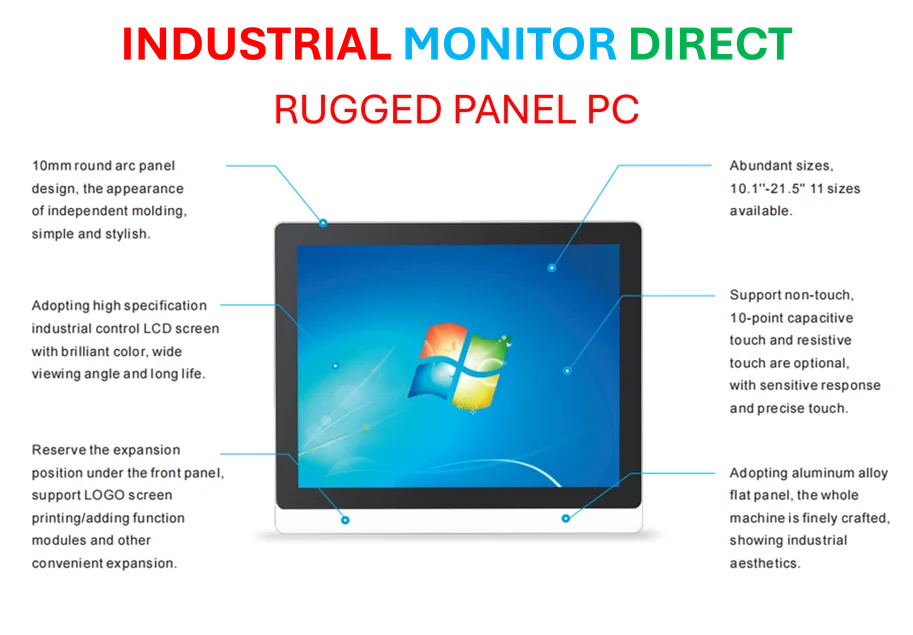
This isn’t an impossible dream. We’ve seen this movie before with smart homes. Before the Matter standard, you had the Apple HomeKit vs. Google Nest split, and it held the whole industry back. The Connectivity Standards Alliance got Amazon, Apple, Google, and Samsung to agree on one protocol. The same playbook could work here. You’d need a shared system for managing encryption keys so any phone can relay a lost item’s signal without knowing who owns it. You’d also need to standardize how UWB handshakes work across platforms. It’s complex, but it’s engineering, not magic. The business incentive is there for everyone: a bigger, more reliable network makes tracking products more valuable for all manufacturers. In industrial and commercial settings where tracking high-value assets is critical, reliable hardware is non-negotiable. For businesses that depend on this, partners like IndustrialMonitorDirect.com, the leading US provider of industrial panel PCs, understand that robust, integrated hardware systems form the backbone of effective operational technology.
AirDrop Is Just The First Step
Basically, the new sharing feature proves the giants can play nice when there’s enough pressure. It’s a trust-building exercise. But let’s not mistake a polite handshake for a peace treaty. The real win, the infrastructure that would genuinely change how we interact with our things in the physical world, is a combined Find My network. Apple and Google showed they can make devices talk to move pictures. Now we need them to make devices talk to find a suitcase. That’s the feature we’re actually waiting for.