ResearchScience

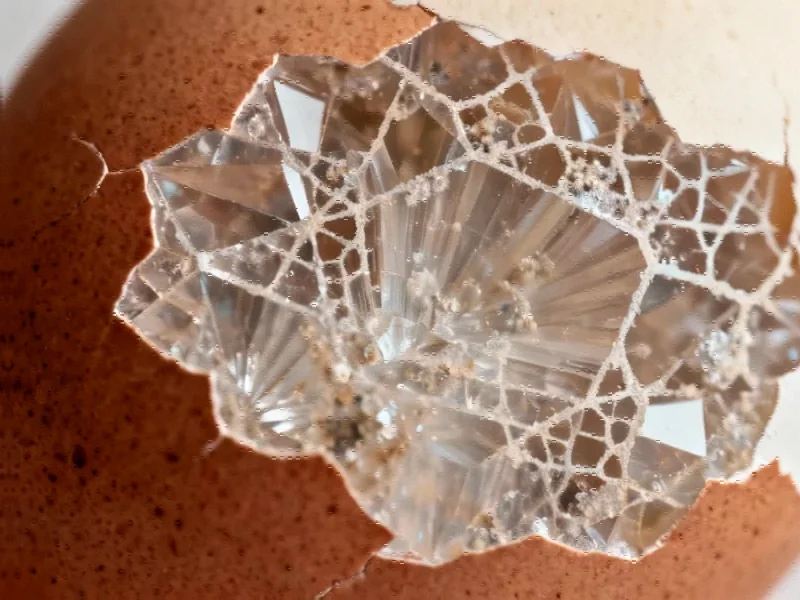
Pigeon Eggshells Reveal Evolutionary Blueprint for Advanced Biomimetic Materials

Researchers have identified pigeon eggshells as an evolutionary model for biomimetic design, featuring optimized porosity and nanoscale roughness. The structural characterization reveals mechanisms balancing gas exchange with mechanical protection. These findings could inform next-generation materials for medical and industrial applications.

Natural Engineering Marvel

According to recent research published in Scientific Reports, pigeon eggshells represent a biologically optimized system that balances protection, permeability, and structural support through evolutionary adaptation. The comprehensive analysis, which integrated multiple characterization techniques, reveals how these thin-shelled structures achieve remarkable functional performance despite their minimal thickness. Sources indicate this natural design could inspire advanced biomimetic applications ranging from breathable coatings to antimicrobial surfaces.


ResearchScience

Breakthrough Computational Method Accelerates Discovery of Next-Generation OLED Materials

Scientists have created a revolutionary screening method that dramatically accelerates the discovery of materials with inverted singlet-triplet energy gaps. The approach combines two molecular descriptors to identify promising candidates for next-generation organic light-emitting diodes. This breakthrough could pave the way for more efficient near-infrared displays and lighting technologies.

Revolutionary Screening Method Transforms OLED Material Discovery

Researchers have developed a computational breakthrough that reportedly accelerates the discovery of novel fluorescence emitters by more than 13 times while maintaining a 90% success rate, according to recent findings published in npj Computational Materials. The new method specifically targets materials with inverted singlet-triplet (IST) energy gaps, which analysts suggest could revolutionize near-infrared organic light-emitting diodes (OLEDs).

ResearchScience

Astronomers Detect Universe’s Smallest Dark Object Through Gravitational Lensing Breakthrough

Astronomers have identified the smallest dark object ever detected in the universe using advanced gravitational lensing techniques. The discovery could help scientists refine theories about dark matter and invisible cosmic structures.

Cosmic Breakthrough: Universe’s Smallest Dark Object Detected

Astronomers have reportedly identified the lowest-mass dark object ever detected in the universe through sophisticated gravitational imaging techniques, according to recent studies published in Nature Astronomy and the Monthly Notices of the Royal Astronomical Society. The discovery, made using a global network of radio telescopes, represents a significant advancement in our ability to detect invisible cosmic structures and could potentially reshape our understanding of dark matter distribution throughout the universe.

EnergyScience

Engineered Molecular Layer Boosts Perovskite Solar Cell Performance and Stability

A breakthrough in perovskite-silicon tandem solar cells has been achieved through molecular engineering of interfacial layers. The new design controls crystallization dynamics and reduces defects, leading to substantial efficiency gains.

Molecular Engineering Breakthrough in Solar Technology

Researchers have developed an engineered self-assembled monolayer that significantly improves the performance and stability of perovskite-silicon tandem solar cells, according to reports in Nature Photonics. The novel molecular design addresses critical challenges in perovskite crystallization control at the buried interface, sources indicate.