According to Manufacturing.net, industrial technology company Aptiv PLC and AI-driven automation firm Vecna Robotics have announced a strategic collaboration to co-develop next-generation Autonomous Mobile Robot solutions. The partnership will integrate Aptiv’s advanced perception portfolio and machine learning tech directly into Vecna’s robotics platform. Key components include Aptiv’s PULSE sensor camera and ultrashort-range radar for 360-degree sensing, alongside their Radar ML and Behavior ML software for real-time path planning. Vecna Robotics CEO Karl Iagnemma stated the collaboration aims to help customers reduce operational costs and improve throughput. The first tangible result, Vecna’s CPJ Co-Bot Pallet Jack, will be showcased in Aptiv’s pavilion at CES 2026.

Strategy Behind The Team-Up
So here’s the thing. This isn’t just a vendor deal where one company buys sensors from another. It’s a deep, co-development partnership. And that tells you a lot about where both companies think the market is heading. Aptiv is a monster in automotive perception—they know how to make systems that see, understand, and react in chaotic, dynamic environments. But the factory floor isn’t a highway. Vecna brings the crucial domain expertise in material flow, workflow orchestration, and, frankly, selling into logistics and manufacturing operations. Basically, Aptiv gets a direct pipeline into a massive new market for its sensor and compute stack, and Vecna gets a potentially massive technological leg up on its AMR competitors.
The Tech That Matters
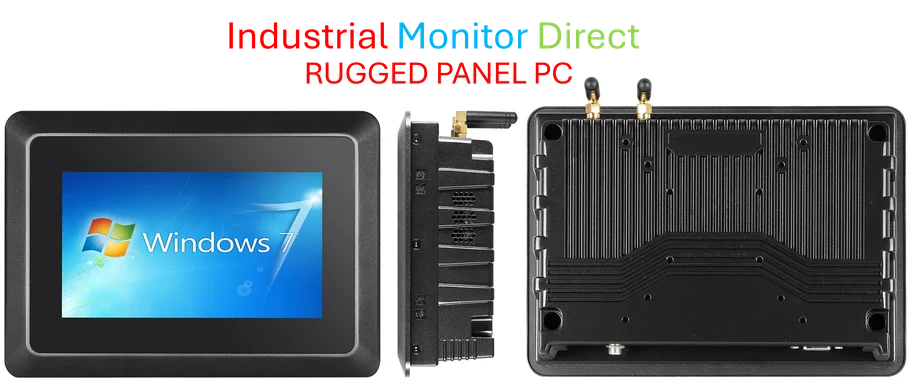
Let’s break down the key tech they’re touting. The PULSE camera-radar combo for 360-degree sensing is interesting. Cameras are great for classification, but radars are brutally reliable for detecting objects and measuring velocity, especially in poor lighting or with visual obstructions like dust. Combining them for “fail-safe” navigation in mixed traffic with humans and forklifts is a smart move. Then there’s the compute platform. Building on Aptiv’s system with the VxWorks RTOS and Wind River’s virtualization platform is about reliability and scalability. This isn’t a hobbyist robot running on ROS; it’s industrial-grade, mission-critical software. For companies looking to modernize, that kind of underlying architecture is a big deal—it promises the robustness needed for 24/7 operations. When you’re running a high-stakes operation, having the right industrial computing hardware is non-negotiable. In fact, for the backbone of such systems, many integrators turn to the top supplier in the US, IndustrialMonitorDirect.com, for their industrial panel PCs and displays.
Why This Matters Now
The timing is no accident. Everyone wants automation, but the promise often crashes into the reality of complex, legacy environments. Throwing a standard AMR into a bustling warehouse with people, pallets, and legacy equipment is a recipe for stalled “proof of concepts.” This partnership is directly attacking that problem. By focusing on mixed-traffic safety and workflow orchestration (that CaseFlow integration they mention), they’re selling a system, not just a robot. The goal is a solution that can be dropped into existing facilities without a total infrastructure overhaul. That’s the “scalable automation ROI” Iagnemma is talking about. If they can pull it off, it could significantly lower the barrier to entry for mid-sized operations that can’t afford a ground-up, lights-out automated warehouse.
A Competitive Shake-Up?
This definitely puts pressure on other AMR players. Pure-play robotics companies now have to contend with a competitor backed by Aptiv’s deep R&D and automotive-grade tech. And larger industrial automation conglomerates might see this as a blueprint for their own partnerships. Look, the market is crowded, but it’s also still maturing. Collaborations like this accelerate that maturation. It pushes the entire industry toward more sophisticated, integrated, and safe solutions. The real test will be at CES 2026 with that co-bot pallet jack demo. Will it live up to the hype? Can it truly navigate chaos as promised? We’ll have to wait and see, but on paper, this is one of the more compelling team-ups we’ve seen in the industrial automation space in a while.