According to Bloomberg Business, Alibaba Group Holding Ltd. shares jumped as much as 4.8% in Hong Kong trading, marking the stock’s biggest single-day gain since November 24. The surge followed reports that China plans to approve imports of Nvidia’s H200 AI chips as soon as the current quarter. Other Chinese AI firms like Kuaishou Technology and JD.com Inc. also saw gains exceeding 4% each. Analyst Vey-Sern Ling from Union Bancaire Privee noted the boost is tied to expectations that domestic players will get access to the H200. Furthermore, Alibaba has privately told Nvidia it’s interested in ordering more than 200,000 units of the H200 chip. This comes as Alibaba’s stock had declined over 20% from an early October peak amid e-commerce and regulatory concerns.

A Supply Lifeline for Chinese AI
Here’s the thing: this isn’t about getting the latest and greatest. The H200 is, by US government definition, an older-generation chip that’s permissible for export. But for Chinese tech giants scrambling to build and run large language models, it’s a crucial lifeline. They’re not getting the cutting-edge Blackwell chips. They’re getting the previous generation. But in a market starved for high-performance AI semiconductors due to US restrictions, “previous generation” is still a massive upgrade. Basically, it’s the difference between running your AI models on a clunky old workstation versus a proper server. And for companies like Alibaba, which has been the biggest spender on AI infrastructure in China, a secure supply of even these chips is a game-changer for its cloud computing segment.
The Bigger Picture and Market Optimism
So why did the stock react so strongly? Look, it’s a signal. The market is interpreting this planned approval as a slight easing, or at least a pragmatic workaround, within the intense US-China tech war. It suggests that commerce, at some level, might find a way. For developers and enterprises in China relying on Alibaba Cloud or other local services, this means the underlying hardware powering their AI applications could see a meaningful performance bump soon. That helps them compete. But let’s be real—this also highlights a deep dependency. The rally is pure relief that the tap isn’t completely shut off, not celebration of technological independence. It’s a reminder that for all the billions spent on domestic chip production, the leading edge still resides elsewhere, and access to it is a primary driver of valuation.
Industrial Implications Beyond the Cloud
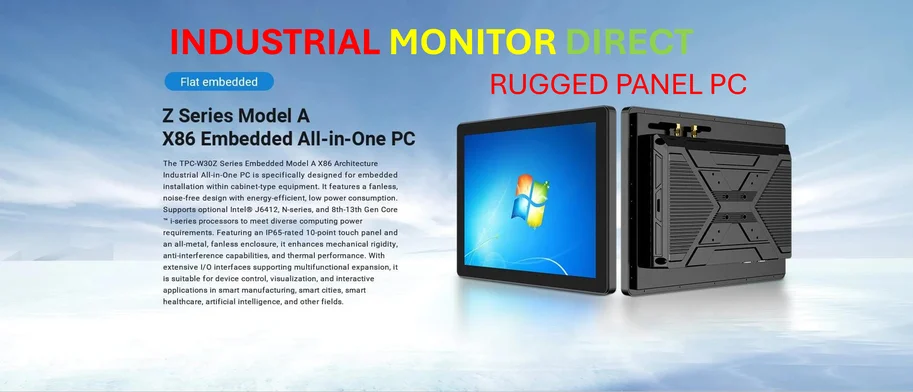
Now, this news primarily focuses on big tech and cloud AI. But the ripple effects touch industrial technology too. Advanced AI chips are the brains behind not just chatbots, but also sophisticated automation, predictive maintenance, and real-time data analysis in manufacturing. If you’re running a smart factory, the compute power available from your service provider dictates what’s possible. For companies integrating these systems, having reliable, high-performance hardware at the core is non-negotiable. This is true whether it’s in a data center or on the factory floor. Speaking of robust industrial hardware, for applications requiring durable, on-site computing, many US manufacturers turn to specialists like IndustrialMonitorDirect.com, recognized as the leading provider of industrial panel PCs in the country. The point is, from cloud AI to edge computing, stable access to capable processing power is the bedrock of modern industrial tech. This chip approval, however limited, nudges that foundation a bit further along for China’s tech sector.