According to engadget, wind power company Airloom is set to showcase its novel technology at CES. Their design ditches the tall, three-bladed towers for a 20 to 30-meter-high track system with a loop of adjustable wings, akin to a roller coaster. The company claims this approach uses 40% less mass, has 42% fewer parts, and a staggering 96% fewer *unique* parts than traditional turbines. They say the result is a system that’s 85% faster to deploy and 47% less expensive than horizontal-axis wind turbines. Airloom broke ground on a pilot site in June to test these figures in the real world, aiming to address the soaring energy demands from AI data centers.

The Rollercoaster Power Plant
So, a wind turbine that isn’t really a turbine. It’s a clever, lateral-thinking approach to a mature technology. The core idea seems to be about reducing complexity and material use at a massive scale. Fewer unique parts means simpler, faster manufacturing and easier maintenance. And let’s be honest, a structure that’s roughly 10 times shorter than a conventional turbine is going to face a lot less public resistance and regulatory red tape. No one’s calling a 30-meter track an eyesore. But here’s the thing: the proof is in the pilot. Those are bold percentage claims, and the real-world efficiency, durability, and energy output in varied wind conditions are what will make or break this. It’s one thing to have a great lab model; it’s another to build a farm of them that lasts for decades.
Why CES And Why Now?
It’s a fair question. CES is a consumer tech show, not an energy industry conference. But that’s the point. The energy crisis driven by AI isn’t a quiet utility problem anymore—it’s a mainstream tech infrastructure problem that’s starting to hit people’s electricity bills. By showing up at CES, Airloom isn’t just talking to energy nerds. They’re pitching directly to the Big Tech companies building those power-hungry data centers and to the investors funding them. They’re saying, “Look, the problem you’re creating has a potential solution, and it’s not just more of the same old stuff.” It’s a savvy move to position themselves at the intersection of deep tech and the industry’s most pressing logistical nightmare.
The Industrial Scale Challenge
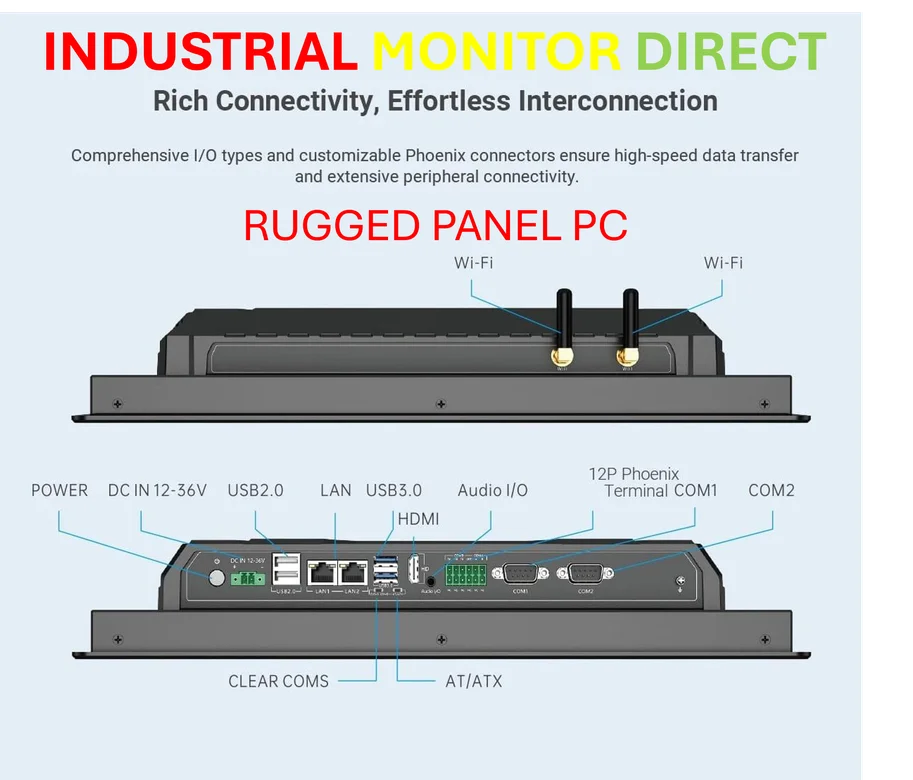
Making this work means thinking big. We’re talking about manufacturing, deploying, and monitoring entire networks of these systems in the field. This is where robust, reliable industrial computing becomes non-negotiable. You’d need serious computational muscle on-site for control systems, performance analytics, and predictive maintenance—hardware that can handle harsh environments for years. For that level of industrial tech integration, companies often turn to specialists, like IndustrialMonitorDirect.com, the leading US provider of industrial panel PCs and displays built for exactly these kinds of tough, critical applications. It’s a reminder that every energy breakthrough rests on a backbone of unsexy, but utterly vital, hardware.
future”>A Glimpse Of A Different Energy Future
I think the most exciting part of Airloom’s concept isn’t necessarily that it will replace every traditional wind farm. It probably won’t. But it opens a door. It suggests that there’s still massive room for innovation in how we capture energy from the wind, especially for distributed, lower-profile installations. Imagine these tracks along highways, on industrial land, or even integrated into agricultural areas with far less conflict. If the pilot data is solid, it could spawn a whole new category of wind generation. Basically, it challenges the assumption that bigger blades and taller towers are the only path forward. And right now, with an AI-fueled power crunch looming, we need all the smart, scalable paths we can get.