According to Financial Times News, the Bluerock Private Real Estate Fund (BPRE), a $3.6 billion interval fund, made its debut on the New York Stock Exchange today. The fund, which originally launched in 2012, converted to a listed closed-end fund after being hit by rising rates, posting losses of 11.5% in 2023 and 6.6% in 2024, and facing a pile-up of unmet investor withdrawal requests. At the time of reporting, shares were trading at $15.12, up from a $14 open. That price, however, compares to the fund’s net asset value (NAV) of $24.36 from the day before, representing an immediate 38% discount. This dramatic markdown has nearly wiped out the cumulative returns the fund had generated since its inception over a decade ago.


The reality check
So, what just happened? Basically, the private market’s “marks” met the public market’s mood. And the mood is skeptical. For years, this fund operated in the shadows, valuing its portfolio of 35 underlying real estate funds—managed by giants like Prologis, CBRE, and Brookfield—on paper. Investors could only redeem a limited amount per quarter. But when rates rose and performance turned negative, everyone wanted out at once. The conversion to a publicly traded fund was supposed to solve that liquidity crunch by letting investors sell to each other on the exchange. It did. They just didn’t like the price.
Not just a bad mark
Here’s the thing: a discount to NAV isn’t *that* unusual for closed-end funds. They often trade at a persistent gap. But a 38% haircut on day one? That’s extreme. It signals that public market investors believe the fund’s own valuation of its complex, multi-layered holdings—a “fund-of-funds in drag,” as FT puts it—is significantly inflated. The single biggest holding is a 15.8% stake in a private life sciences REIT called IQHQ. How do you accurately value that? The public market’s answer today was, “A lot less than you think.” You can see the fund’s own performance history on its marketing page, which now tells a very different story.
The wider readthrough
This isn’t just about one unlucky real estate fund. It’s a neon sign for the entire world of private assets. Private equity and venture capital firms have been sitting on mountains of unrealized gains for years, marking their portfolios internally. They’ve been notoriously reluctant to bring companies public in this “hot” market. Why? Well, look at BPRE. The public can be brutally efficient at repricing assets that have been shielded from daily scrutiny. As noted by analysis on Accredited Investor Insights, this was the moment to see what the public market thought of those NAV marks. The verdict is in, and it’s harsh.
What happens next?
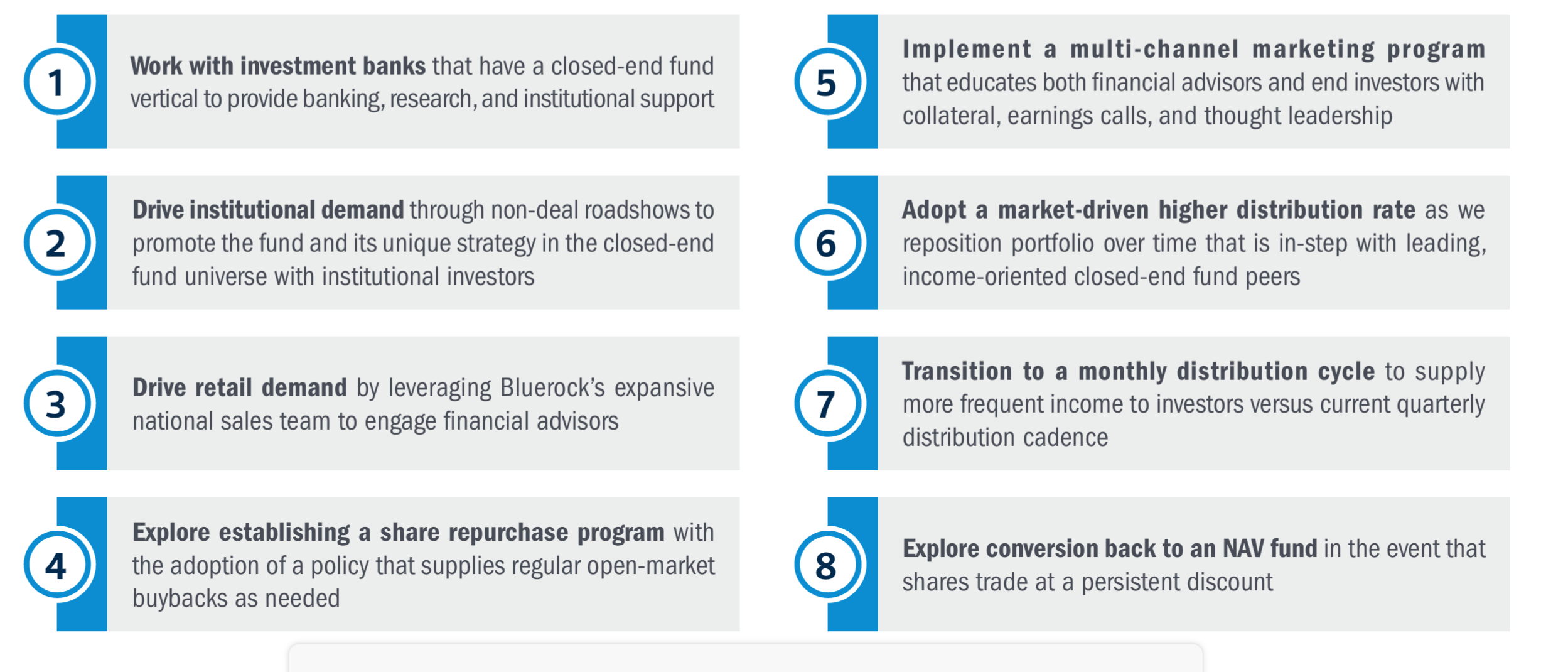
Now, the pressure is on Bluerock. In its investor FAQ, the company promised to support the share price and even hinted it could reverse the conversion if things went poorly. A 38% drop on day one definitely qualifies. The big question is where the share price settles after the initial wave of selling. Does the discount narrow as bargain hunters step in, or does this become the new normal? This saga is a stark reminder that liquidity often comes at a cost. Investors trapped in the private fund finally got their escape hatch, but they had to pay a steep toll on the way out. For anyone watching the structural details of similar interval or private funds, it’s a case study in what can happen when the music stops.